
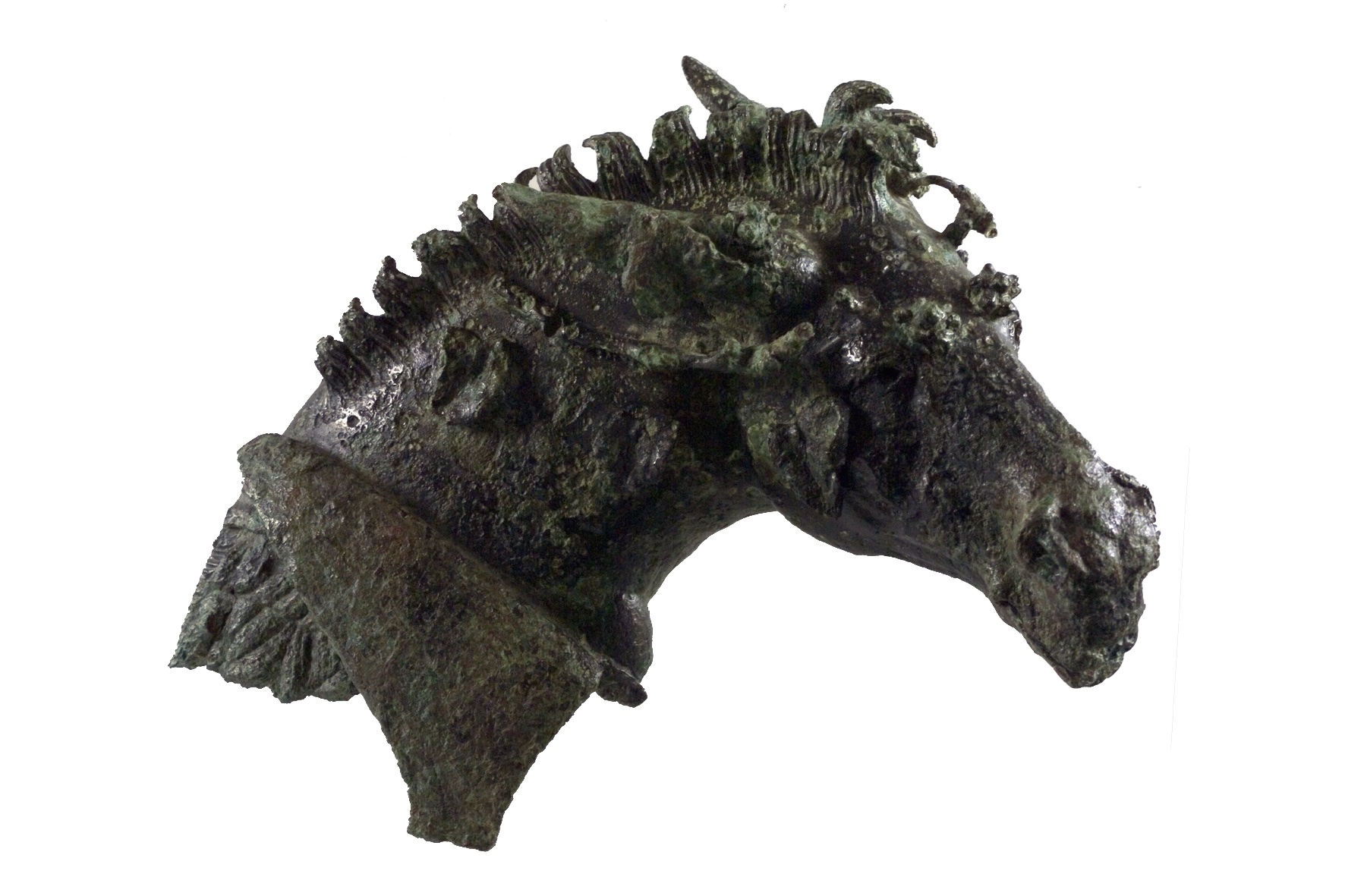
As is well known, the Romans used to feast whilst reclining on special beds known as lecti tricliniares. These generally consisted of four tall, shaped legs, a rectangular frame with wooden slats or a mesh of interwoven leather straps, and a headboard with sinuous side panels that prevented the mattresses from shifting and the cushions from falling off. The backrests were covered with bronze plates, known as fulcra, which were often decorated with animal heads at the top. The most common design, also mentioned by Juvenal, was the mule’s head, of which the example from Concordia is a splendid specimen. The mule, rendered with lively strokes, has flared nostrils and a half-open mouth, as if laughing; it wears a wreath of ivy and vine leaves and, tied around its neck, a leopard skin. All these elements clearly refer to the world of Dionysus, god of wine and intoxication, who was well suited to being celebrated during banquets.
Technical information
-
Type —
-
Disciplinary area —
The object in the museum
Related objects

Last updated: 13/05/2026, 10:32